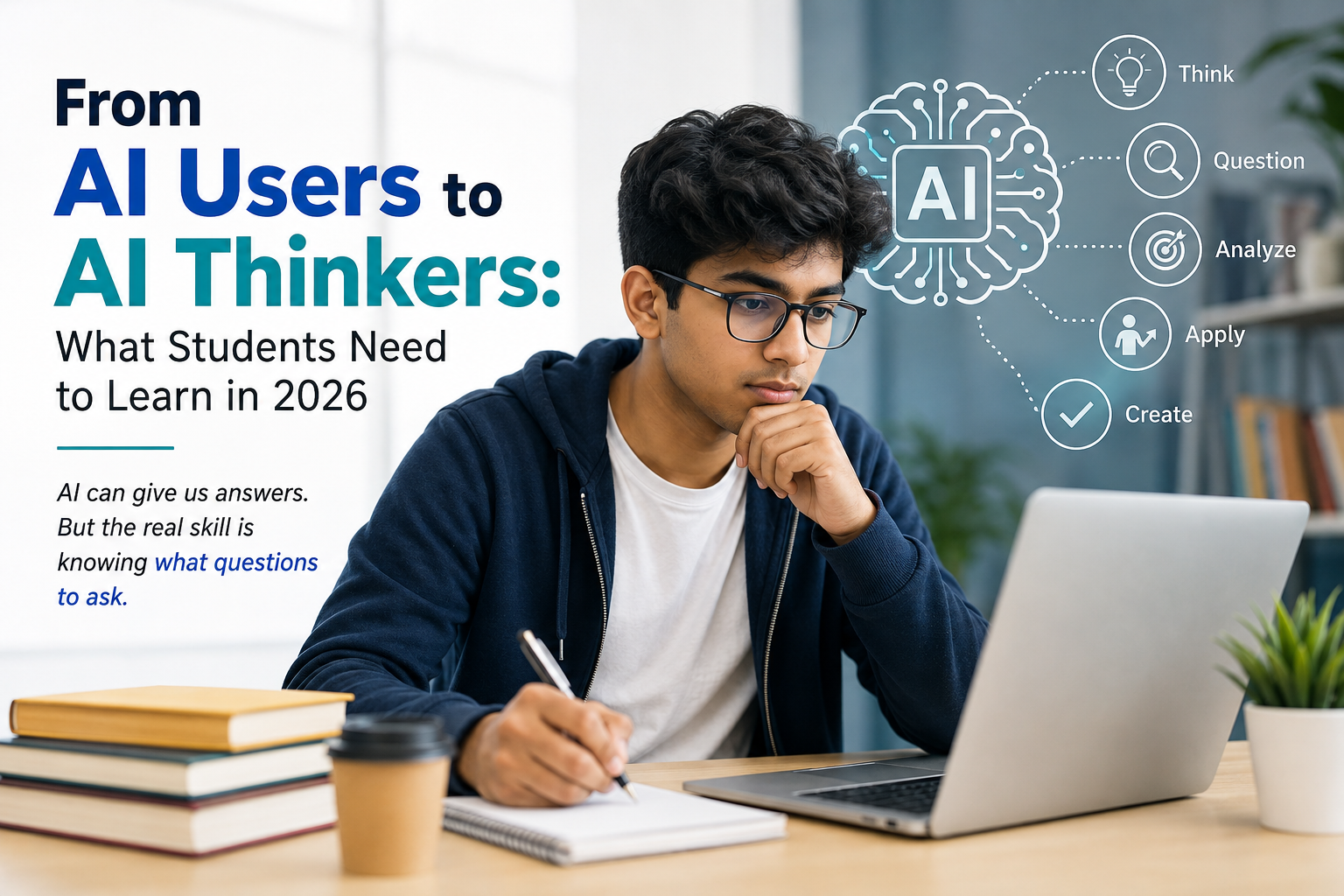
From AI Users to AI Thinkers: What Students Need to Learn in 2026
AI can give us answers. But the real skill is knowing what questions to ask.
Over the past few years, I have noticed a major change in the way students learn, search for information, complete assignments, and prepare for their careers.
Earlier, when students had a question, they would search Google, read articles, watch videos, discuss the topic with friends, or ask a teacher.
Today, there is another option available within seconds — Artificial Intelligence.
Students can ask AI to explain a concept, write a program, prepare notes, create a presentation, analyse data, generate ideas, and even help them prepare for an interview.
This is a powerful change.
But as an educator, I believe we need to ask a more important question:
Are our students becoming better thinkers, or are they simply becoming better users of AI?
That is where the real challenge begins.
AI Is Not the Problem
I don’t believe that students using AI is a bad thing.
In fact, I encourage students to explore AI tools.
AI can make learning more interesting and accessible. A student who does not understand a programming concept can ask for another explanation. A student struggling with mathematics can ask for a step-by-step solution. A student preparing for an interview can practise questions with an AI tool.
The problem starts when AI becomes a replacement for thinking.
If a student receives an answer from AI and submits it without understanding it, very little learning has happened.
If a student asks AI to write an entire program but cannot explain how the program works, the student has completed a task—but has not necessarily developed a skill.
This distinction is becoming increasingly important.
From “Give Me the Answer” to “Help Me Understand”
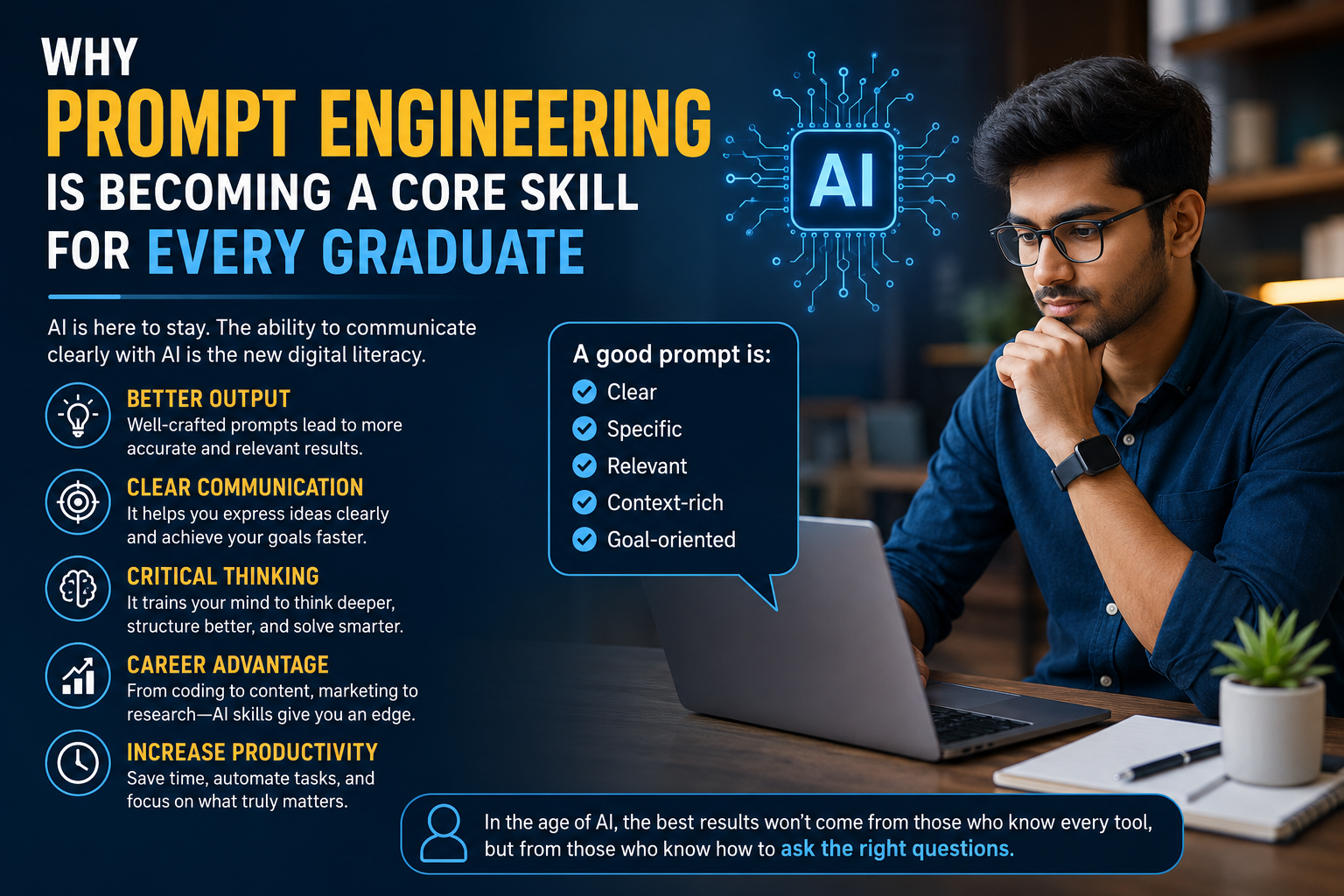
One of the biggest changes I would like to see in students is a change in the way they ask questions.
Instead of asking:
“Write an assignment on Artificial Intelligence.”
A student could ask:
“Explain the impact of Artificial Intelligence on employment, give me different viewpoints, and help me develop my own argument.”
The second approach requires more thinking.
The student is not simply asking AI to produce content. The student is using AI as a learning partner.
This is the mindset we need to develop.
The Question Becomes More Important
When information was difficult to find, knowing where to search was an important skill.
Today, information is everywhere.
AI can summarise it, organise it and present it in seconds.
So, in my view, the value is shifting from simply finding information to asking meaningful questions and evaluating the answers.
Students need to learn:
What should I ask?
Why am I asking it?
Is the answer correct?
What information is missing?
Can I verify it?
Do I agree with the answer?
Can I explain it in my own words?
These are not just AI skills.
They are thinking skills.
5 Skills Students Should Develop in 2026
1. AI Literacy
Students don’t necessarily need to become AI engineers.
But every student should understand the basics of AI.
They should know how AI systems are used, what they can do, where they can make mistakes, and why blindly trusting AI-generated information can be risky.
AI literacy should become part of modern education.
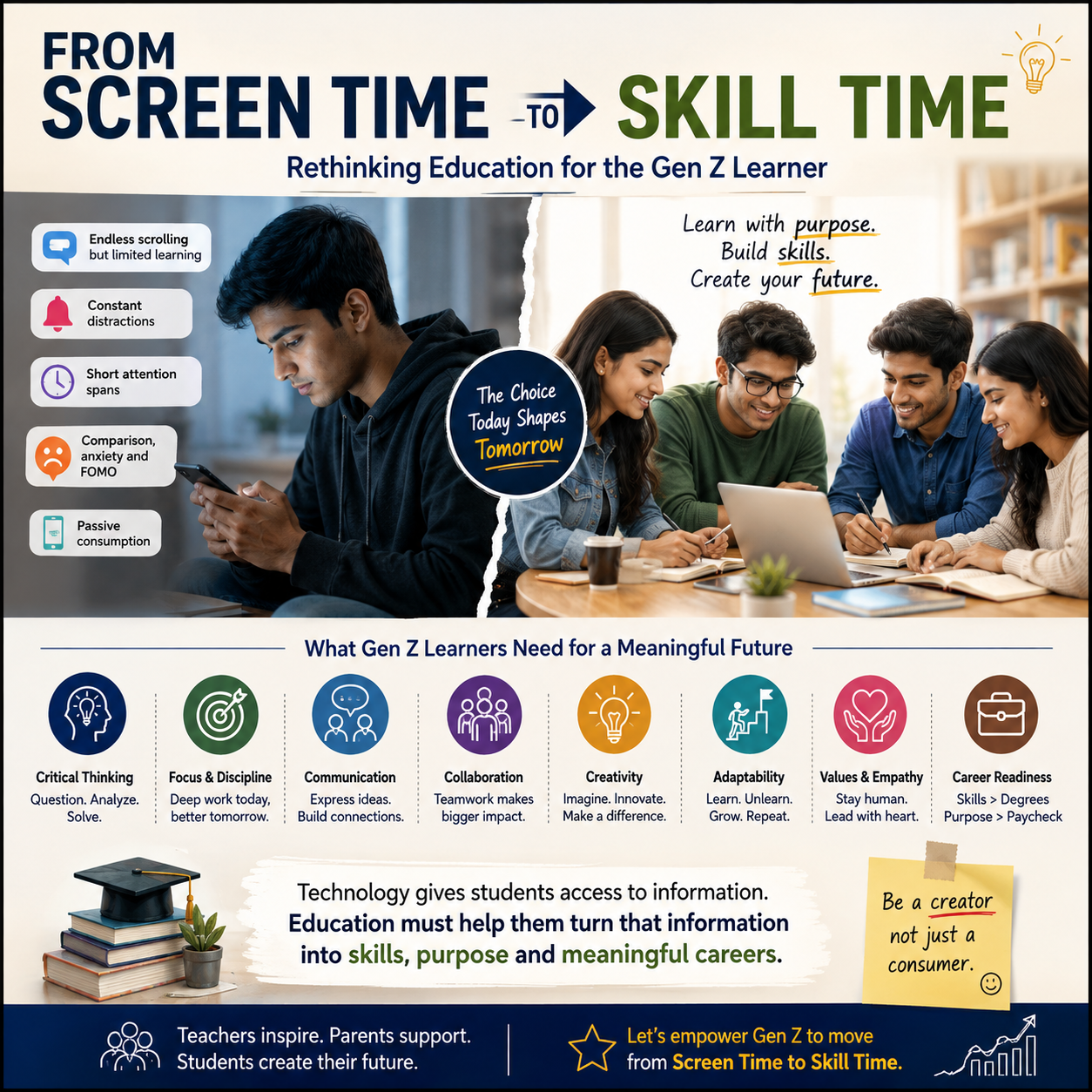
2. Critical Thinking
This is perhaps the most important skill.
AI can produce a very convincing answer—and still be wrong.
Students therefore need to develop the habit of questioning information.
“AI said it” is not the same as “it is true.”
Students should learn to compare sources, verify facts, identify assumptions, and look for evidence.
3. Problem-Solving
In the workplace, employees are rarely given a perfectly defined problem.
They need to understand the situation, identify the actual problem, consider different solutions, and decide what to do.
AI can help with this process.
But the human still needs to understand the problem.
Students should therefore spend more time solving real-world problems instead of only completing textbook exercises.
4. Communication
AI can write an email.
AI can prepare a report.
AI can create a presentation.
But students still need to communicate their ideas clearly.
They need to explain a project to a client.
They need to discuss an idea with a team.
They need to answer questions in an interview.
They need to present their research.
Good communication will remain a human advantage.
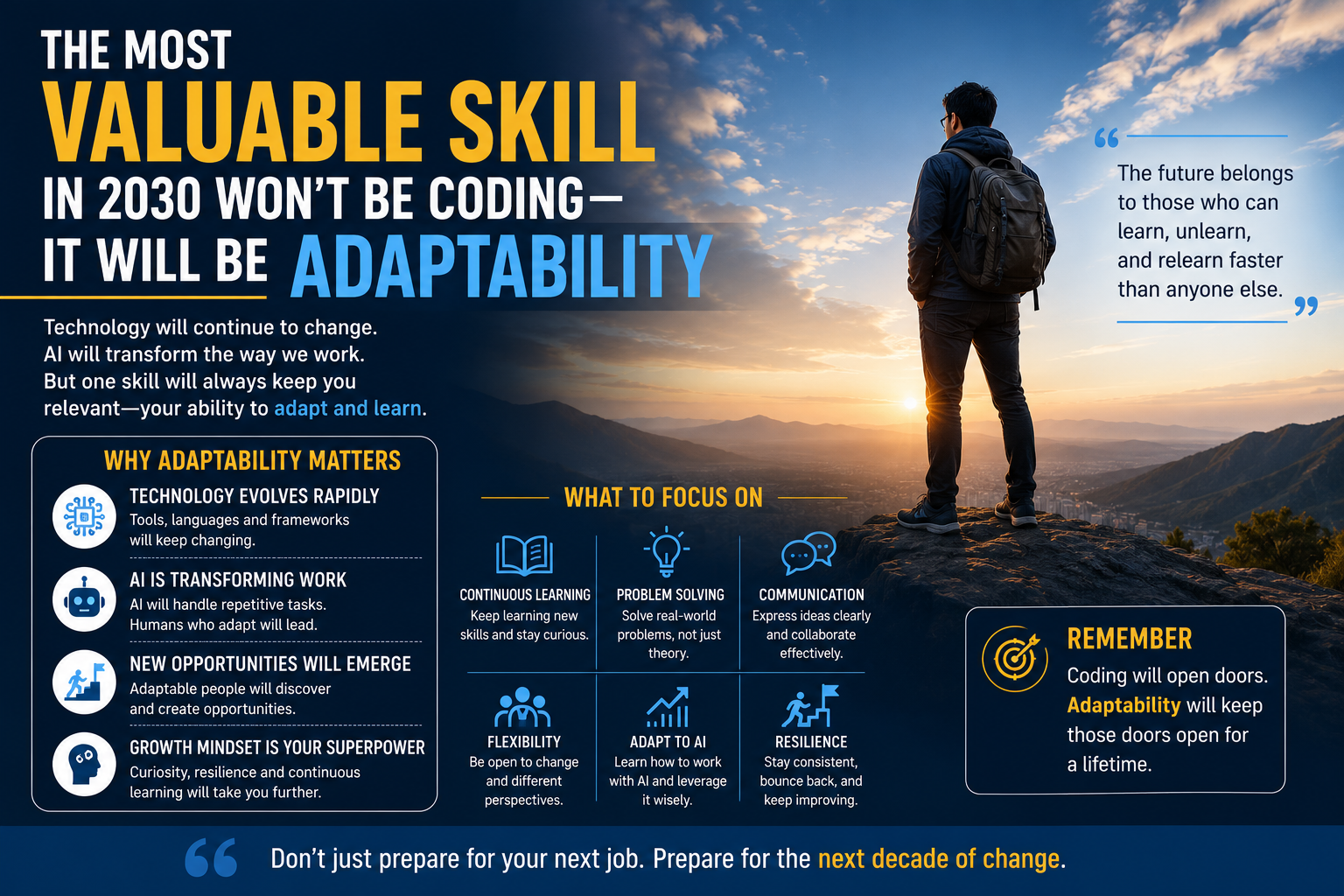
5. Adaptability
Technology is changing faster than our traditional curriculum.
A programming language that is popular today may not have the same importance a few years from now.
The same applies to AI tools.
Therefore, students should not focus only on learning one tool.
They should learn how to learn.
A student who can adapt, explore new technologies, learn independently, and continuously improve will always have an advantage.
Coding Is Changing Too
As someone involved in computer science education, I see this change very clearly.
Students can now use AI to generate code, identify errors, explain programming concepts, and suggest solutions.
This does not mean coding is becoming useless.
I believe the opposite.
The role of the programmer is changing.
Students should move beyond simply learning syntax.
They should understand:
What problem am I solving?
Why am I choosing this approach?
How does the code work?
What happens if the input changes?
Is the solution efficient and secure?
Can I modify it when the requirements change?
AI may help write the code.
But students need to understand the logic behind the code.
That understanding cannot be outsourced completely.
The Classroom Also Needs to Change
AI is also forcing educators to rethink the way we teach and assess students.
If an assignment can be completed by simply copying an AI-generated response, perhaps the assignment itself needs to change.
Instead of only asking students to write about a topic, we can ask them to:
analyse a real dataset,
solve a local problem,
conduct a small survey,
compare two AI-generated answers,
identify errors in an AI response,
explain their decision-making process,
build a small working prototype,
present and defend their work.
These activities make learning more meaningful.
They also help us understand whether the student actually understands the subject.
AI Should Support Learning, Not Replace Learning
For me, this is the central idea.
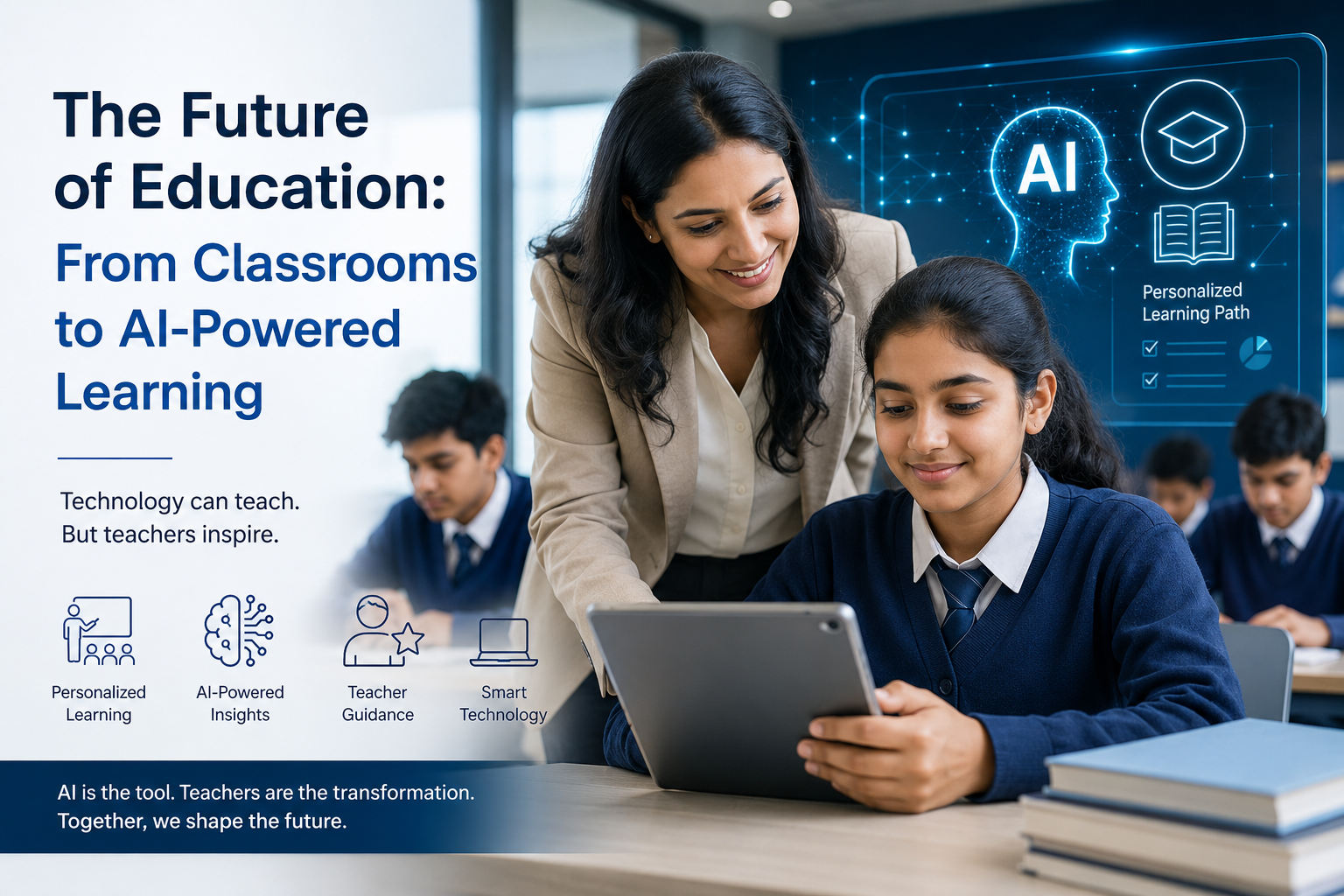
I don’t see AI as a replacement for teachers.
I see it as another tool that can support learning.
A teacher can provide context, experience, encouragement, feedback and human understanding.
AI can provide explanations, examples, ideas and assistance.
When used properly, both can complement each other.
The goal should not be to keep AI outside the classroom.
The goal should be to teach students how to use AI responsibly and intelligently.
What Will Employers Look For?
The workplace is also changing.
Employers may not simply ask:
“Do you know this technology?”
They may increasingly ask:
“Can you use technology to solve problems?”
There is a difference.
A student may know how to use an AI tool.
Another student may understand the business problem, use AI appropriately, analyse the result, verify the information and present a practical solution.
The second student brings much greater value.
This is why I believe AI fluency, problem-solving, communication, critical thinking and adaptability will become increasingly important for graduates.
Students Don’t Need to Compete With AI
I often think students sometimes look at AI as something they need to compete against.
I don’t think that is the right way to look at it.
Students should learn to work with AI.
A calculator did not eliminate mathematics.
The internet did not eliminate learning.
Search engines did not eliminate knowledge.
Similarly, AI does not have to eliminate human thinking.
But it does require us to think differently.
The students who learn how to combine their knowledge with AI will have an advantage.
The Student I Want to See in 2026
I don’t want to see students who simply know how to generate an AI response.
I want to see students who can say:
“This is the problem.”
“This is what I found.”
“This is what AI suggested.”
“I verified the information.”
“I don’t agree with this part, and here is why.”
“This is my solution.”
That, to me, represents an AI thinker.
From AI Users to AI Thinkers
The future of education is not about choosing between humans and AI.
It is about preparing students to become better humans with AI.
AI can generate.
AI can analyse.
AI can recommend.
AI can automate.
But students still need to question, understand, decide, create and take responsibility.
That is why I believe our focus in 2026 should move from producing students who are simply AI users to developing students who are AI thinkers.
The technology will continue to change.
The tools will continue to change.
But the ability to think critically, solve problems, communicate clearly and adapt to change will remain valuable.
And perhaps the most important lesson we can give our students is this:
Don’t just ask AI for an answer. Ask AI to help you understand the problem.
Because the future will not belong only to those who know how to use AI.
It will belong to those who know how to think with it.