Category: Blog

Your blog category

  • Everyone is excited about AI. But very few people talk about the foundation that makes AI successful.

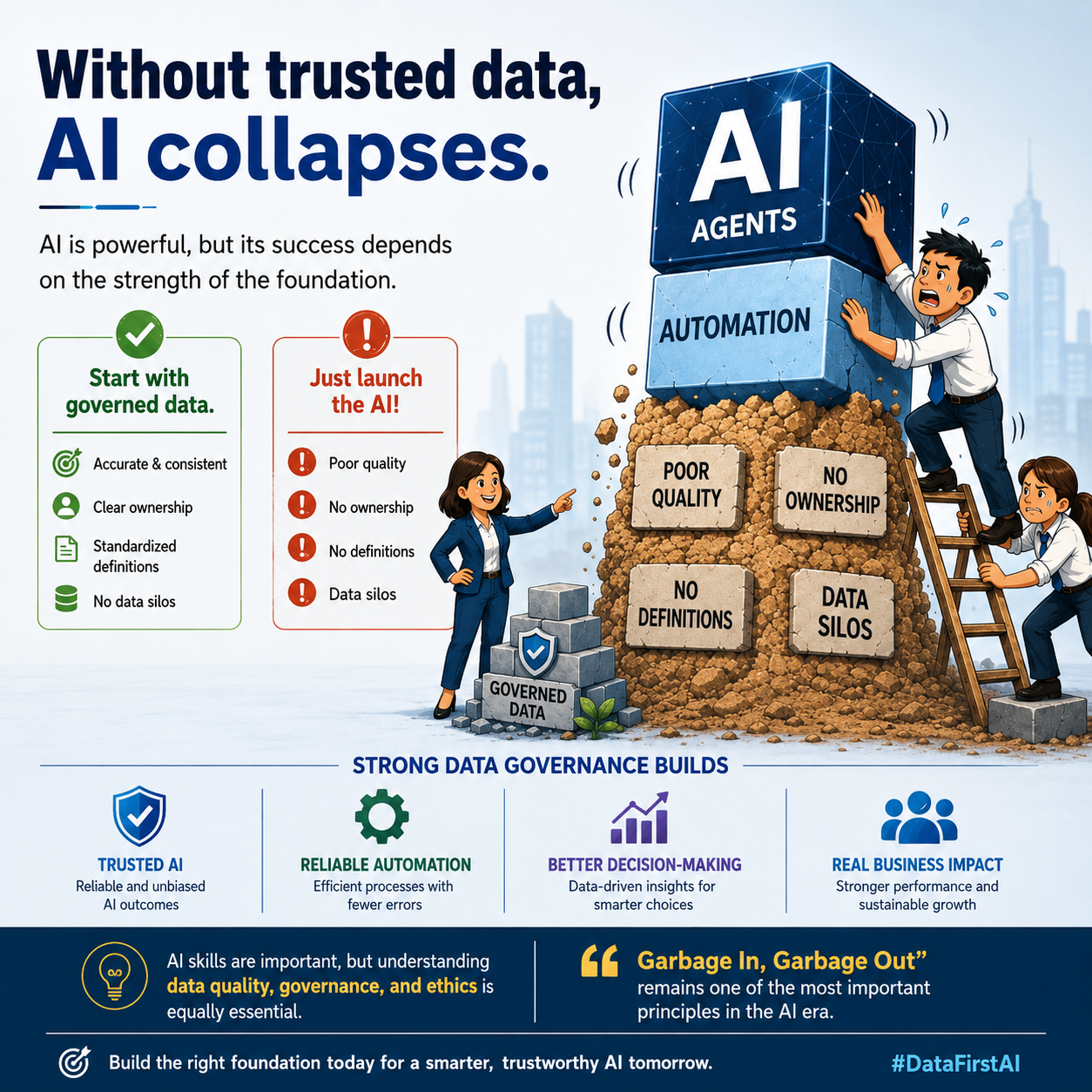
    Everyone is excited about AI. But very few people talk about the foundation that makes AI successful.

    AI

    Everyone is excited about AI. But very few people talk about the foundation that makes AI successful.

    In my opinion, AI is not just about powerful models or the latest AI agents. It’s about the quality of the data we feed them.

    If the data is incomplete, inconsistent, or poorly managed, even the most advanced AI system will produce unreliable results. This is why data governance, data quality, and clear ownership are no longer optional—they are essential.

    Before asking, “How can we implement AI?” organizations should first ask:

    • Is our data accurate and trustworthy?
    • Do we have standard definitions across teams?
    • Who owns and maintains our data?
    • Have we broken down data silos?

    As an educator, I also believe this is an important lesson for students. While learning AI and Machine Learning is valuable, understanding data quality, governance, and ethics is what will help build AI solutions that people can actually trust.

    The old principle still holds true in the AI era:

    “Garbage In, Garbage Out.”

    Let’s build strong data foundations first—because trusted data leads to trusted AI.

    What are your thoughts? Should organizations prioritize Data First or AI First?

    #ArtificialIntelligence #DataScience #MachineLearning #DataGovernance #DataQuality #ResponsibleAI #DigitalTransformation #AI #Innovation #Leadership

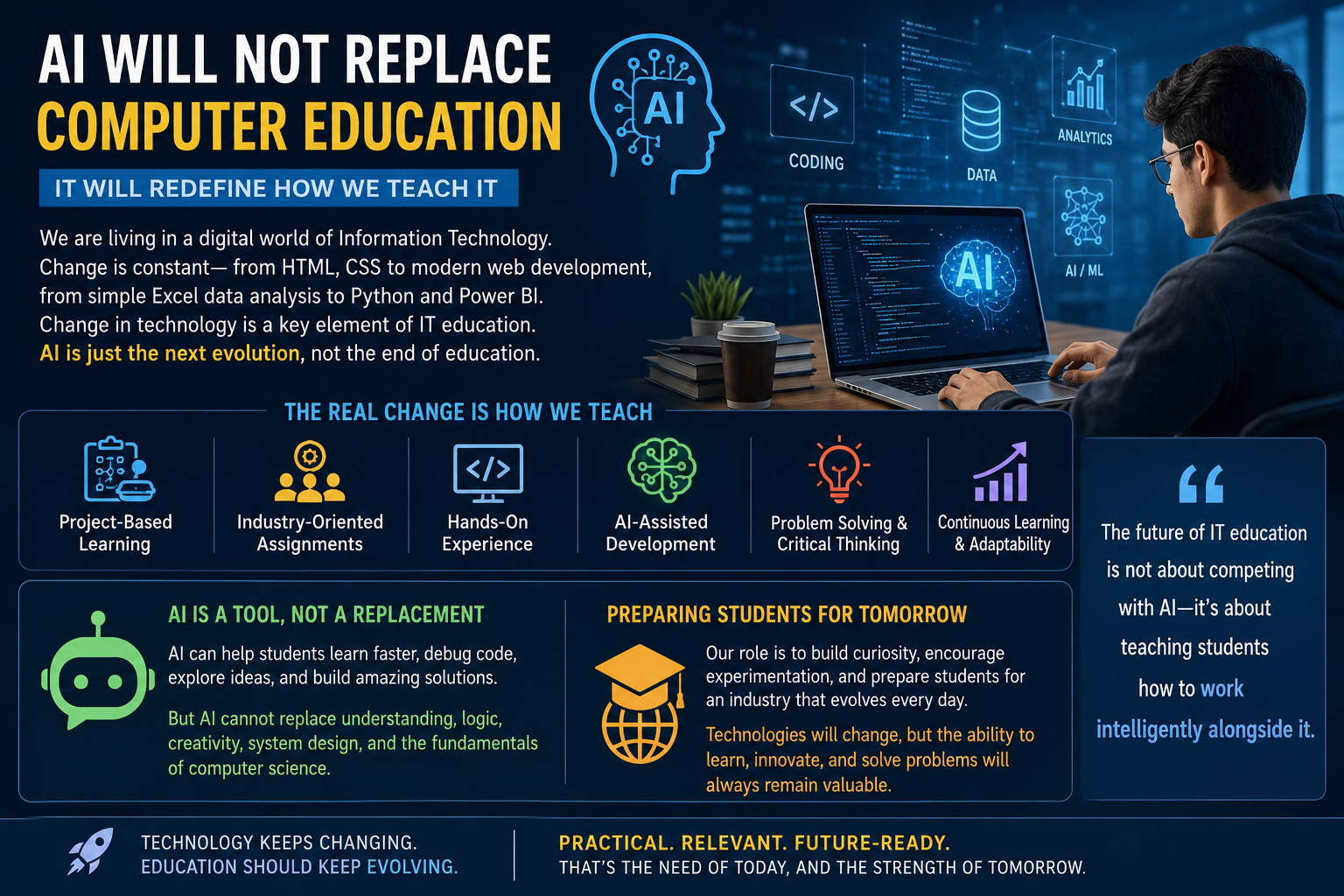
  • AI Will Not Replace Computer Education—It Will Redefine How We Teach It

    AI Will Not Replace Computer Education—It Will Redefine How We Teach It

    Artificial Intelligence has sparked an important discussion across the education sector. Many believe AI will completely transform—or even replace—computer education. My perspective is different.

    AI will not replace computer education. It will simply become the next chapter in its evolution.

    The field of Information Technology has always been driven by continuous change. Every generation of technology professionals has adapted to new tools, programming languages, frameworks, and methodologies.

    Think about the journey:

    • We moved from static HTML websites to dynamic, full-stack web development.
    • We evolved from basic CSS to responsive design frameworks and modern UI technologies.
    • Data analysis progressed from spreadsheets like Microsoft Excel to Python, Power BI, and AI-powered analytics.
    • Software development shifted from traditional desktop applications to cloud computing, mobile applications, DevOps, and now AI-assisted development.

    None of these advancements eliminated computer education. Instead, they expanded what students needed to learn.

    Today, AI is simply the next technological milestone.

    The Real Change Is Not What We Teach—It’s How We Teach

    The greatest transformation should happen inside our classrooms.

    For years, computer education has often emphasized theory, definitions, and examinations. While theoretical knowledge remains important, today’s technology industry expects graduates who can solve real-world problems, build applications, analyze data, collaborate effectively, and continuously learn new technologies.

    As educators, we need to shift our focus toward:

    • Project-based learning
    • Industry-oriented assignments
    • Hands-on programming experience
    • AI-assisted software development
    • Problem-solving and critical thinking
    • Continuous learning and adaptability

    Students should graduate not only with knowledge but with the confidence to apply that knowledge in professional environments.

    AI Is a Tool, Not a Replacement

    Just as calculators did not replace mathematics, AI will not replace computer science education.

    Instead, AI can help students:

    • Learn concepts faster
    • Debug code more efficiently
    • Explore multiple programming approaches
    • Build innovative applications
    • Improve productivity

    However, AI cannot replace the understanding of algorithms, logical thinking, system design, software engineering principles, or creativity. These remain the foundation of every successful technology professional.

    Preparing Students for Tomorrow

    The role of educators is no longer limited to delivering content. Our responsibility is to prepare students for an industry that evolves every day.

    This means encouraging curiosity, experimentation, lifelong learning, and adaptability. Technologies will continue to change, but the ability to learn, innovate, and solve problems will always remain valuable.

    Final Thoughts

    Technology has never stood still, and neither should education.

    AI is not the end of computer education—it is another milestone in its journey. The future belongs to educators who embrace innovation and to students who are willing to learn beyond textbooks.

    If we adapt our teaching methods to become more practical, industry-focused, and innovation-driven, AI will strengthen computer education rather than diminish it.

    The future of IT education is not about competing with AI—it’s about teaching students how to work intelligently alongside it.

    What are your thoughts? Do you believe AI will replace computer education, or will it simply reshape how we teach and learn? I’d love to hear your perspective.

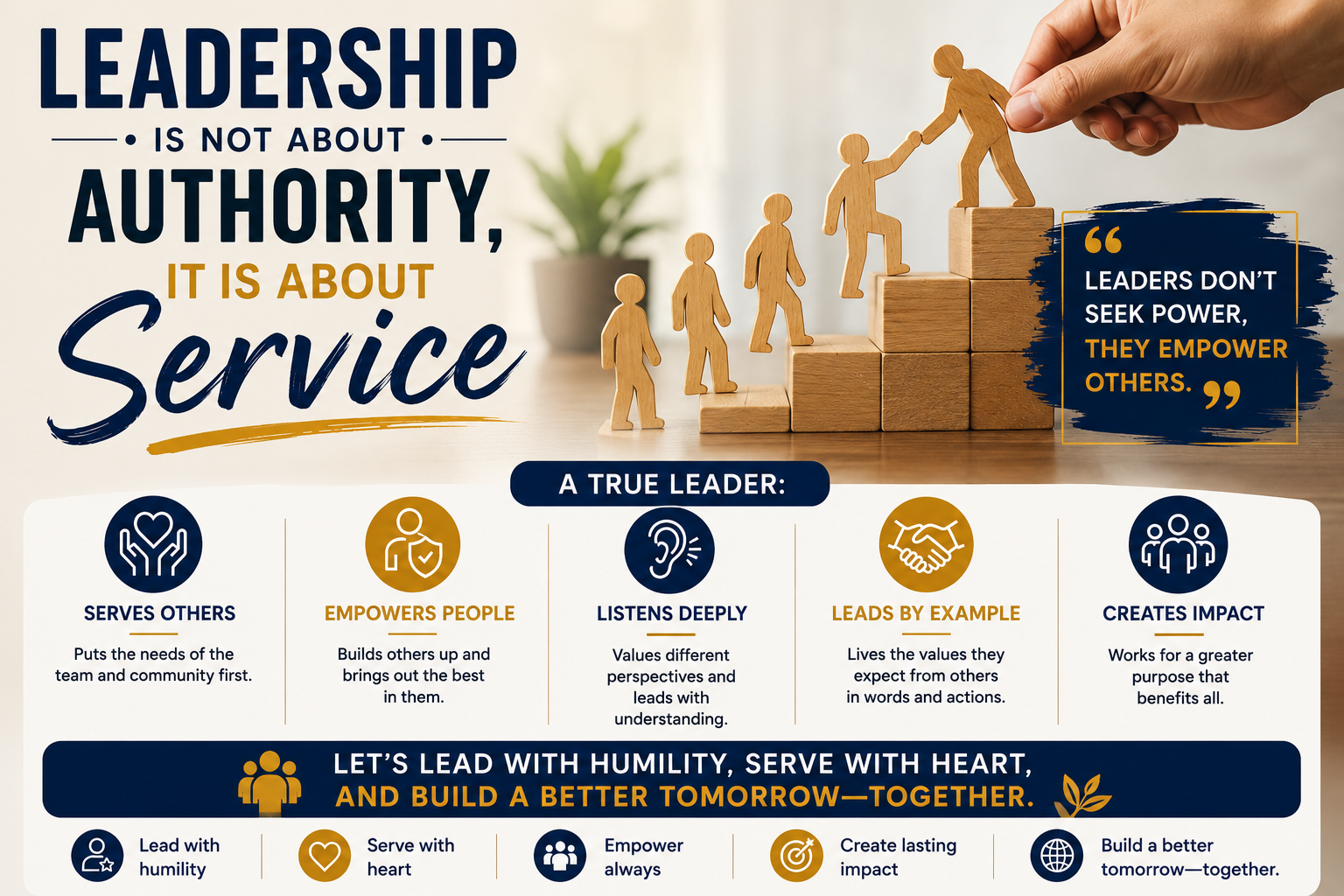
  • Leadership isn’t measured by how much authority you have—it’s measured by how many people grow because of you.

    Leadership isn’t measured by how much authority you have—it’s measured by how many people grow because of you.

    In today’s fast-changing world, leadership is no longer about titles, hierarchy, or control. It’s about creating an environment where people feel valued, trusted, and inspired to do their best work.

    A true leader:

    ✔️ Serves before expecting to be served.
    ✔️ Empowers people instead of limiting their potential.
    ✔️ Listens to understand, not just to respond.
    ✔️ Leads through actions, not just words.
    ✔️ Creates an impact that extends beyond individual success.

    I’ve come to believe that the most respected leaders are not those who seek recognition—they are the ones who quietly invest in others, celebrate team achievements, and help people become better than they were yesterday.

    Whether we are educators, managers, entrepreneurs, or team members, we all have opportunities to lead through kindness, integrity, and service.

    At the end of the day, people may forget what we said, but they will always remember how we made them feel and the confidence we helped them discover.

    Leadership is not about being in charge. It’s about taking care of those in your charge.

    Let’s choose to build teams that are empowered, workplaces built on trust, and a future where leadership is defined by service rather than authority.

    How do you define true leadership? I’d love to hear your thoughts in the comments.

    #Leadership #ServantLeadership #LeadershipDevelopment #LeadByExample #Empowerment #ProfessionalGrowth #Teamwork #PeopleFirst #WorkplaceCulture #Mentorship #LeadershipMindset #Success #Growth #Inspiration

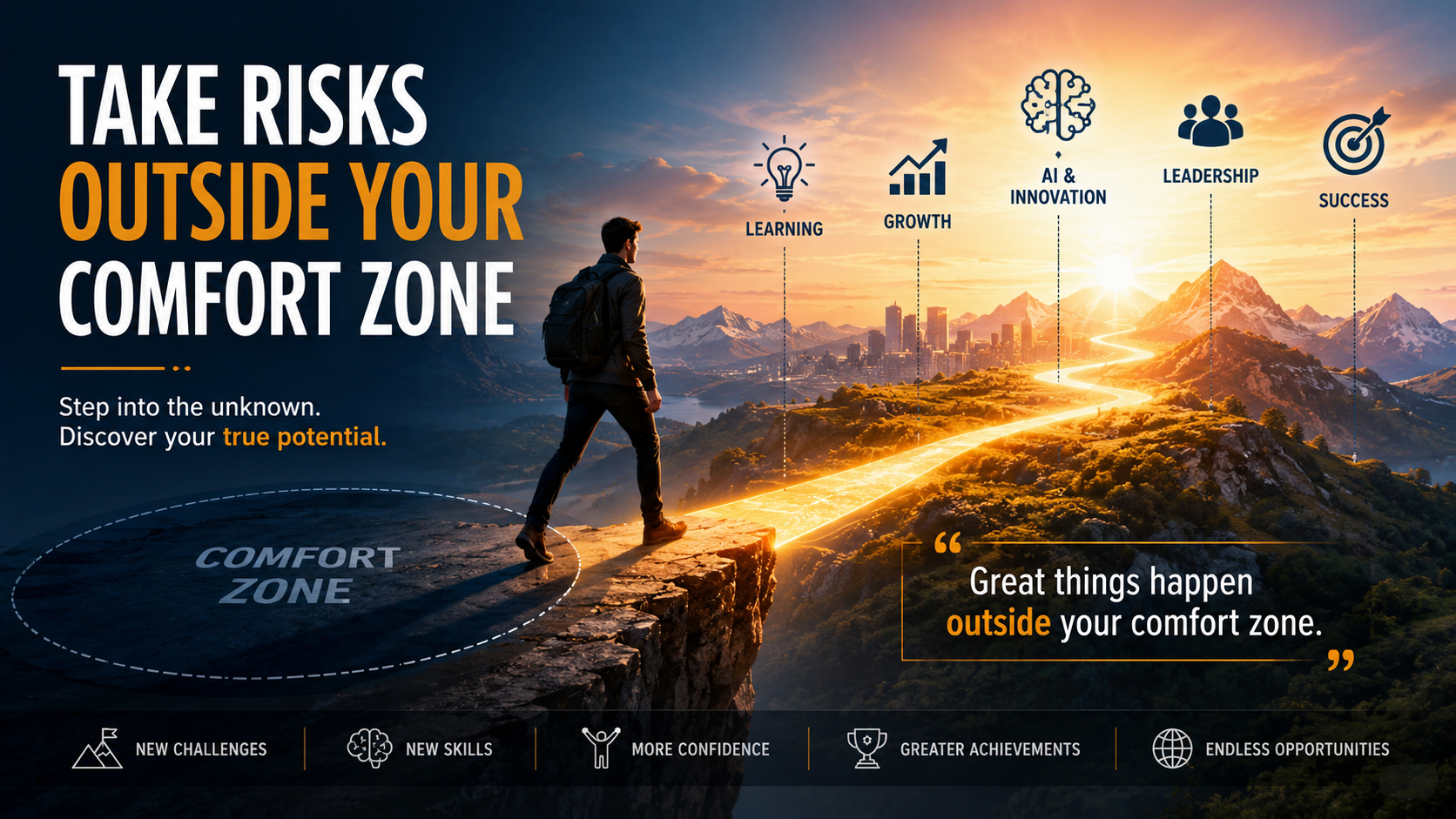
  • Take Risks Outside Your Comfort Zone: Where Growth, Innovation, and Success Begin

    Take Risks Outside Your Comfort Zone: Where Growth, Innovation, and Success Begin

    We all have a comfort zone.

    It is the place where our routines feel familiar, our decisions seem predictable, and our confidence comes from knowing what to expect. There is nothing inherently wrong with being comfortable. In fact, comfort can provide stability and peace of mind.

    But comfort has one limitation—it rarely challenges us to become more than we already are.

    Every significant achievement, every meaningful career transition, every entrepreneurial venture, and every life-changing opportunity begins with a decision to step into the unknown. The path may not always be easy, but it is almost always worth taking.

    The greatest opportunities in life are rarely found where we feel safest. They are discovered when we choose growth over certainty and courage over fear.

    Why We Resist Taking Risks

    Most people are not afraid of hard work. They are afraid of uncertainty.

    Questions such as:

    • What if I fail?
    • What will others think?
    • Am I good enough?
    • What if I lose everything I’ve worked for?

    These thoughts are completely natural. Our minds are designed to protect us from uncertainty. However, while fear protects us from danger, it can also prevent us from recognizing opportunity.

    The reality is simple:

    Every successful professional, entrepreneur, researcher, athlete, and leader has experienced fear before taking their biggest leap.

    The difference is not the absence of fear.

    The difference is choosing to move forward despite it.

    Growth Begins at the Edge of Comfort

    Imagine learning to swim without entering the water.

    Imagine becoming a public speaker without ever standing on a stage.

    Imagine building a successful business without speaking to your first customer.

    It is impossible.

    Growth requires discomfort.

    Whether it is learning a new programming language, pursuing higher education, accepting a leadership role, changing careers, or launching a startup, progress always begins with doing something unfamiliar.

    The comfort zone offers security.

    The growth zone offers possibility.

    Calculated Risks Are Better Than Comfortable Regrets

    Taking risks does not mean acting recklessly.

    Successful people rarely gamble with their future.

    Instead, they take calculated risks.

    A calculated risk means:

    • Learning before acting.
    • Planning before executing.
    • Understanding potential outcomes.
    • Preparing for challenges.
    • Accepting that failure is part of learning.

    This mindset transforms fear into preparation.

    Instead of asking,

    “What if I fail?”

    Ask,

    “What will I learn if things don’t go as planned?”

    That single shift in perspective changes everything.

    Every Failure Builds Future Success

    One of the biggest misconceptions about successful people is that they rarely fail.

    In reality, successful individuals often fail more than others because they attempt more.

    Failure is not the opposite of success.

    Failure is one of its most valuable teachers.

    Every setback provides:

    • Better decision-making
    • Greater resilience
    • Improved problem-solving
    • Increased emotional intelligence
    • Stronger confidence

    Experience cannot be downloaded.

    It must be lived.

    Innovation Lives Outside the Comfort Zone

    The world we live in today is changing faster than ever.

    Artificial Intelligence, automation, cloud computing, data science, cybersecurity, and digital transformation continue to reshape industries.

    Professionals who embrace change remain relevant.

    Those who resist change eventually struggle to keep pace.

    Learning new technologies may feel uncomfortable.

    Adapting to new workplace expectations may seem challenging.

    Upskilling after years of experience may appear intimidating.

    Yet every one of these challenges creates new opportunities for those willing to learn.

    Innovation begins where routine ends.

    Small Risks Create Big Transformations

    Many people believe success requires one giant leap.

    More often, it comes from hundreds of small courageous decisions.

    It could be:

    • Speaking up during a meeting.
    • Applying for a role that feels beyond your experience.
    • Starting a personal blog.
    • Publishing research.
    • Learning Artificial Intelligence.
    • Networking with industry professionals.
    • Starting an online course.
    • Building your first application.
    • Sharing your knowledge publicly.

    Each small step expands your confidence

    Each success encourages the next.

    Eventually, what once seemed impossible becomes part of your everyday capability.

    The Comfort Zone Is Temporary

    Technology evolves.

    Industries evolve.

    Skills evolve.

    Markets evolve.

    The comfort zone that feels safe today may become a limitation tomorrow.

    Continuous learning is no longer optional.

    Professionals who remain curious, adaptable, and willing to embrace change are the ones who lead the future.

    The most successful careers are built not by avoiding uncertainty, but by developing the confidence to navigate it.

    Lessons from Nature

    Consider how an eagle teaches its young to fly.

    The young bird cannot remain safely in the nest forever.

    At the right moment, it is encouraged to leave the security of its surroundings.

    The first flight is uncertain.

    The wings may hesitate.

    But only after leaving the nest does the bird discover its true ability.

    Our careers and personal lives follow the same principle.

    Potential remains hidden until we challenge ourselves.

    Practical Ways to Step Beyond Your Comfort Zone

    You don’t need to make dramatic life changes overnight.

    Start with manageable challenges.

    • Learn one new skill every quarter.
    • Read books outside your usual interests.
    • Attend professional conferences and workshops.
    • Volunteer to lead projects.
    • Mentor someone.
    • Build a side project.
    • Publish articles or blogs.
    • Ask thoughtful questions during meetings.
    • Seek constructive feedback.
    • View mistakes as opportunities to improve.

    Small consistent actions create remarkable long-term results.

    A Personal Reflection

    Throughout every professional journey, there are moments when staying comfortable seems easier than moving forward.

    Whether it is pursuing higher education, embracing emerging technologies, writing research papers, starting a blog, or accepting new responsibilities, each milestone begins with uncertainty.

    Looking back, the moments that felt the most challenging often became the most rewarding.

    Every risk taken with preparation and purpose became another step toward growth.

    The journey continues because learning never truly ends.

    Final Thoughts

    Comfort gives us stability.

    Risk gives us growth.

    Neither is inherently right or wrong.

    The key is knowing when comfort becomes complacency.

    Success does not belong to those who never experience fear.

    It belongs to those who refuse to let fear make their decisions.

    Take thoughtful risks.

    Learn continuously.

    Embrace challenges.

    Believe in your ability to grow.

    Because the life you aspire to build is often waiting just beyond the boundaries of your comfort zone.

    Remember:

    “Your comfort zone is a place of familiarity, but your future is built where courage meets opportunity. The greatest achievements begin the moment you decide to take one step beyond what feels comfortable.”
     

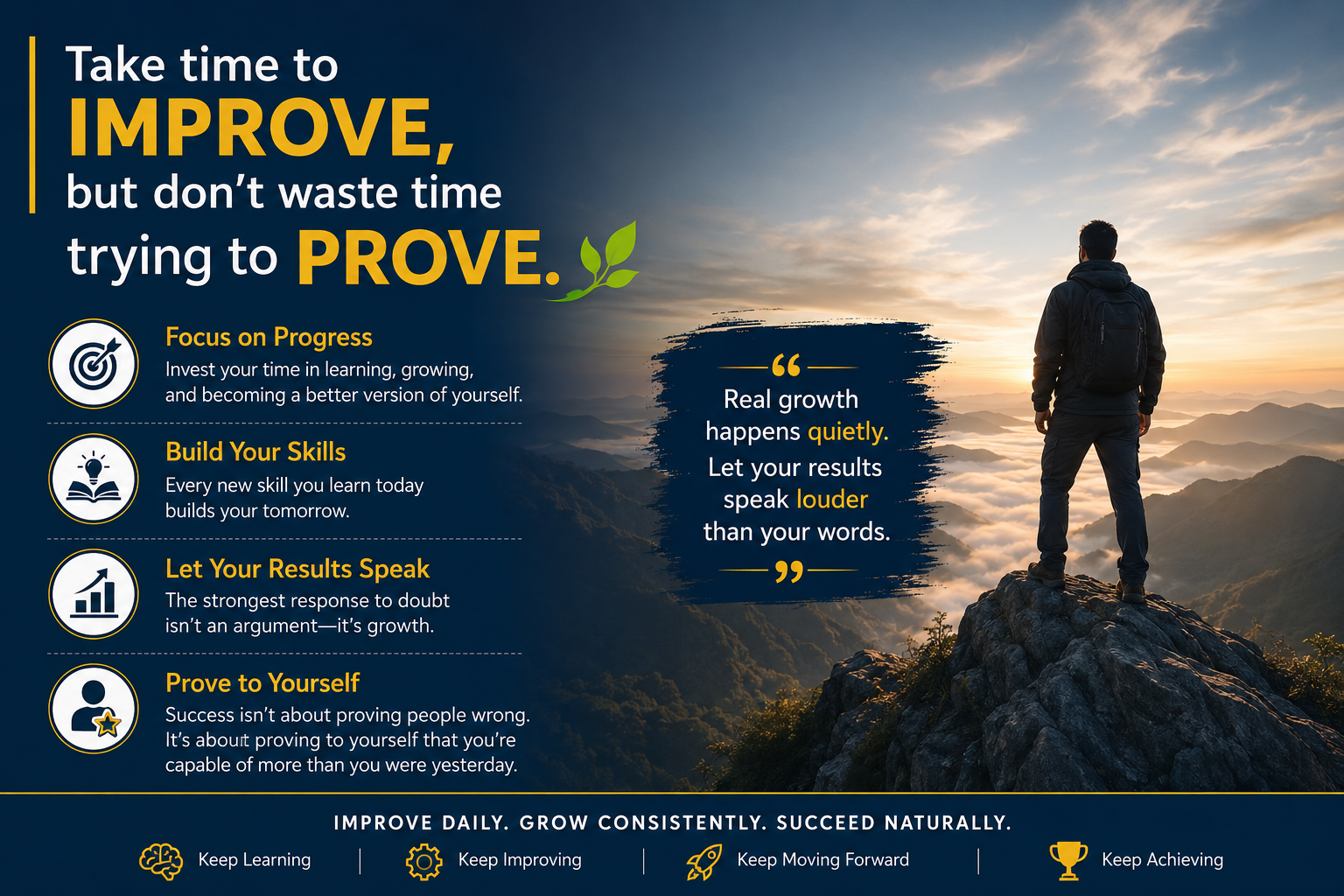
  • Take time to IMPROVE, but don’t waste time trying to PROVE.

    Take time to IMPROVE, but don’t waste time trying to PROVE.

    In today’s fast-paced and highly connected world, it’s easy to fall into the trap of seeking validation. We often feel the need to justify our decisions, defend our choices, or prove our capabilities to others.

    But true professional growth doesn’t come from convincing people—it comes from continuously improving yourself.

    Every hour spent chasing approval is an hour that could be invested in learning a new skill, deepening your expertise, solving meaningful problems, or creating something of lasting value.

    The most successful professionals understand that excellence is built through consistent effort, lifelong learning, and resilience—not through constant validation.

    People may doubt your potential, underestimate your abilities, or question your journey. That’s perfectly okay. Their opinions do not define your future.

    Instead of focusing on proving others wrong, focus on becoming better than you were yesterday.

    ✔ Learn continuously.
    ✔ Embrace constructive feedback.
    ✔ Build your skills with purpose.
    ✔ Stay patient and trust the process.
    ✔ Let your work speak for itself.

    Remember, real success is measured by the value you create, the lives you impact, and the person you become—not by the applause you receive.

    Progress over praise. Improvement over approval. Growth over validation.

    Your greatest competition isn’t someone else—it’s the person you were yesterday.

    Keep learning. Keep improving. Keep moving forward.

    #ProfessionalGrowth #Leadership #PersonalDevelopment #CareerGrowth #ContinuousLearning #GrowthMindset #SelfImprovement #Success #Motivation #LifelongLearning #LeadershipDevelopment #Mindset #Innovation #CareerSuccess

  • Walking Together, Growing Together: Lessons from Ashadhi Ekadashi and the Wari

    Walking Together, Growing Together: Lessons from Ashadhi Ekadashi and the Wari

    This year, I had the opportunity to be a part of the Ashadhi Wari and experience the devotion, discipline, and unity that define this incredible spiritual journey. Unfortunately, due to some unavoidable circumstances, I couldn’t make it.

    Even so, the spirit of the Wari continues to inspire me.

    Ashadhi Ekadashi is much more than a festival—it’s a powerful reminder that every meaningful journey is built on faith, perseverance, humility, and consistency.

    Every year, thousands of Warkaris walk together towards Pandharpur, united by a common purpose and unwavering devotion to Lord Vitthal. Their journey teaches us that success—whether in life, education, research, or our careers—is not about speed but about taking consistent steps with patience and determination.

    The values of the Wari resonate deeply with our professional lives:

    • Every small step brings us closer to our goals.
    • Discipline outlasts temporary motivation.
    • Teamwork and mutual support make every journey meaningful.
    • Humility and continuous learning are the true foundations of excellence.

    Although I missed the opportunity to join the Wari this year, I hope to experience this extraordinary journey in the future.

    On this Ashadhi Ekadashi, may Lord Vitthal bless us with the strength to stay committed to our purpose, the humility to keep learning, and the courage to keep moving forward—one step at a time.

    Vitthal Vitthal! 🙏

    #AshadhiEkadashi #Wari #Vitthal #Leadership #ProfessionalGrowth #LifelongLearning #Resilience #Discipline #Teamwork #Motivation #LinkedIn


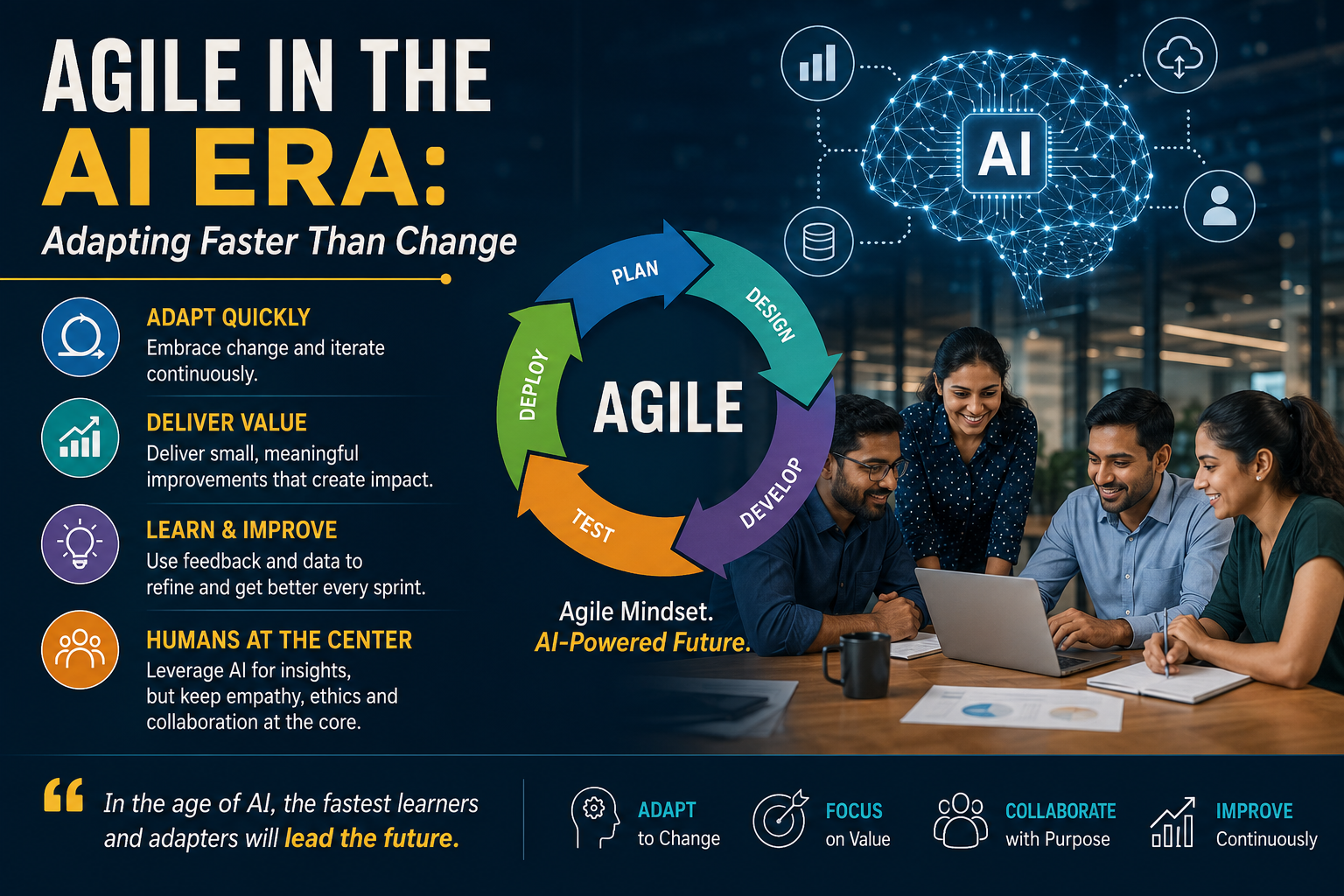
  • Agile in the AI Era: Adapting Faster Than Change

    Agile in the AI Era: Adapting Faster Than Change

    Agile

    Over the years, I’ve seen technology evolve from traditional software development to cloud computing, data science, and now the age of Artificial Intelligence. One thing has remained constant throughout this journey:

    Change is inevitable—but how we respond to it determines our success.

    Today, AI is reshaping every industry. New models, frameworks, and tools emerge almost every week. Customer expectations evolve faster than project timelines, and decisions that once took months now need to be made in days.

    In such an environment, Agile is no longer just a project management methodology—it has become a strategic mindset.

    From my experience in academia, software development, and AI-driven research, I’ve realized that successful teams don’t try to predict every change. Instead, they build systems and processes that are flexible enough to embrace change.

    Agile teaches us to:

    ✔ Deliver value continuously instead of waiting for perfection.

    ✔ Learn from feedback and improve with every iteration.

    ✔ Encourage collaboration between technical experts, business stakeholders, and end users.

    ✔ Reduce risk by validating ideas early rather than making assumptions.

    These principles are even more relevant when developing AI-powered solutions. Unlike traditional software, AI systems continuously learn from data, evolve over time, and require constant monitoring, evaluation, and refinement.

    However, technology alone is never enough.

    The real competitive advantage comes from people who are willing to learn, adapt, and innovate continuously. AI can accelerate our work, but Agile ensures we remain responsive, customer-focused, and prepared for whatever comes next.

    As professionals, our goal should not simply be to adopt AI—it should be to build organizations and teams that can evolve alongside it.

    Because in the AI era, the fastest learners—not necessarily the biggest organizations—will shape the future.

    What has been your biggest Agile lesson while working with AI or digital transformation initiatives? I’d be interested to hear your perspective.

    #Agile #ArtificialIntelligence #AI #DigitalTransformation #Leadership #ProjectManagement #Innovation #DataScience #MachineLearning #ContinuousImprovement #FutureOfWork #ProfessionalGrowth

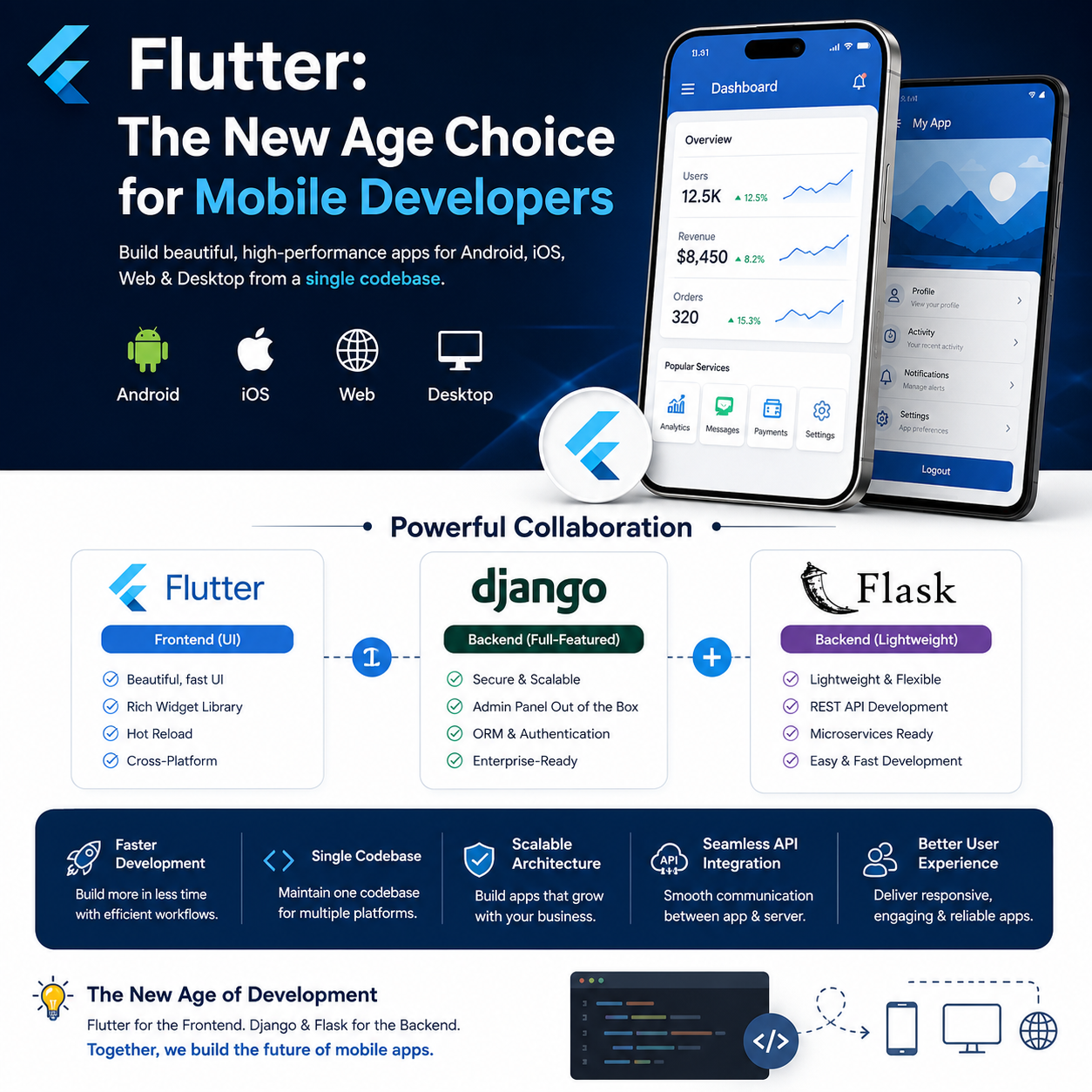
  • Flutter + Django + Flask: A Smart Combination for Building Modern Mobile Applications

    Flutter + Django + Flask: A Smart Combination for Building Modern Mobile Applications

    Technology is changing faster than ever, and so are the expectations of users. Today, people want mobile applications that are fast, visually appealing, secure, and available on every platform. As developers, our challenge is to build these applications efficiently without compromising quality.

    Over the last few years, I have explored different technologies for mobile and web development. One combination that truly stands out is Flutter for the frontend and Django or Flask for the backend. Together, they provide a powerful ecosystem for developing scalable and high-performance applications.

    Why Flutter Has Become a Developer’s Favourite

    Flutter, developed by Google, has changed the way developers approach cross-platform development. Instead of maintaining separate codebases for Android and iOS, Flutter allows us to write one application that runs smoothly on multiple platforms.

    What impressed me the most is its Hot Reload feature. Seeing changes instantly during development not only saves time but also makes the entire development process enjoyable.

    Flutter also comes with a rich collection of widgets that help developers create beautiful and responsive user interfaces without relying heavily on third-party libraries.

    For students, beginners, and professional developers alike, Flutter offers an excellent starting point for modern mobile application development.

    Why Django Still Remains One of the Best Backend Frameworks

    A beautiful mobile application is only one part of the solution. Every successful application needs a reliable backend to manage users, data, authentication, and security.

    This is where Django shines.

    Built on Python, Django provides almost everything required for enterprise application development. From user authentication and database management to security and an administrative dashboard, many essential features are available out of the box.

    Instead of spending valuable time building these features from scratch, developers can focus on solving real business problems.

    Where Flask Fits In

    Not every project requires a large backend framework.

    Sometimes all we need is a lightweight REST API, an AI model, or a simple service that communicates with the mobile application.

    Flask is perfect for such situations.

    Its simplicity gives developers complete flexibility. Whether you’re building an API for a machine learning model or creating a microservice, Flask helps you get started quickly without unnecessary complexity.

    Why I Like Combining Flutter with Django and Flask

    One of the biggest advantages of software development today is choosing the right technology for the right purpose.

    Flutter creates a smooth and attractive user interface.

    Django manages users, databases, authentication, and security.

    Flask handles lightweight APIs, AI integrations, and microservices.

    Together, they create a balanced architecture that is efficient, scalable, and easy to maintain.

    This combination allows frontend and backend developers to work independently while communicating through REST APIs, making development faster and more organized.

    Where Can This Technology Stack Be Used?

    The possibilities are almost endless.

    You can build:

    • Student Management Systems
    • Learning Management Platforms
    • Career Prediction Systems
    • Healthcare Applications
    • Banking Solutions
    • E-commerce Platforms
    • Hotel Booking Applications
    • Inventory Management Systems
    • AI-powered Mobile Applications
    • Business Dashboards

    Whether you’re developing a startup MVP or an enterprise solution, this technology stack adapts remarkably well.

    Looking Towards the Future

    The software industry is moving towards cross-platform development, cloud-native applications, and artificial intelligence.

    Flutter is becoming one of the preferred frameworks for mobile development, while Python continues to dominate areas such as backend development, automation, and AI.

    Combining Flutter with Django and Flask gives developers the opportunity to work across multiple domains using technologies that are modern, widely adopted, and backed by strong communities.

    For students entering the software industry, learning this stack can open doors to exciting career opportunities.

    For professionals, it offers a productive way to build scalable applications with less effort and greater flexibility.

    Final Thoughts

    Every technology has its strengths, but choosing technologies that complement each other is what truly makes a difference.

    Flutter provides an exceptional user experience.

    Django delivers security and scalability.

    Flask brings flexibility and simplicity.

    Together, they create a development ecosystem capable of building modern applications that meet today’s expectations and are ready for tomorrow’s challenges.

    As developers, learning never stops. Every new framework we explore broadens our perspective and helps us create better software. If you’re planning your next project or beginning your development journey, I encourage you to explore the combination of Flutter, Django, and Flask. You might discover that it becomes your preferred technology stack too.

    Thank you for reading! I regularly share practical insights on software development, artificial intelligence, web technologies, and mobile application development. Feel free to explore more articles on sameerinnovates.in, and if you found this post useful, share it with fellow developers and technology enthusiasts.

    Happy Coding!

  • Beyond Accuracy: Why Conformal Prediction is the Future of Trustworthy AI

    Beyond Accuracy: Why Conformal Prediction is the Future of Trustworthy AI

    Beyond Accuracy: Why Conformal Prediction is the Future of Trustworthy AI

    In Machine Learning, we often celebrate models with high accuracy. But in real-world applications, one question matters just as much:

    “How confident is the model in its prediction?”

    This is where Conformal Prediction comes into the picture.

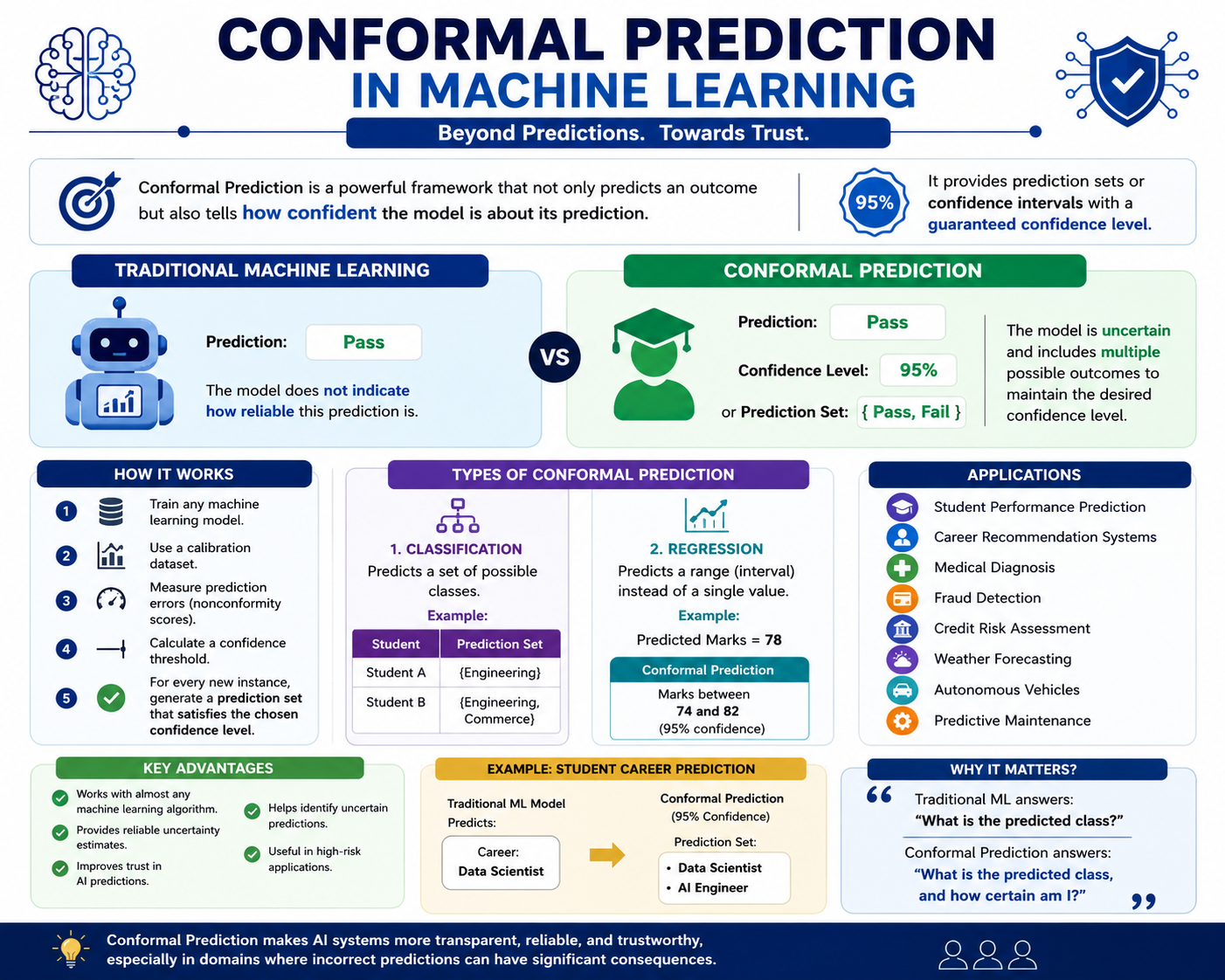
    Unlike traditional machine learning models that provide a single prediction, Conformal Prediction quantifies uncertainty by generating prediction sets (for classification) or prediction intervals (for regression) with a user-defined confidence level, such as 95%.

     Traditional Prediction
     Student Career: Data Scientist

     Conformal Prediction (95% Confidence)
     Suitable Career Options:

    • Data Scientist
    • AI Engineer

    Instead of forcing a single answer, the model communicates its uncertainty—making AI predictions more transparent, reliable, and actionable.

     Why Conformal Prediction Matters

    • Provides confidence-aware predictions
    • Improves the reliability and trustworthiness of AI systems
    • Works with most existing machine learning algorithms
    • Helps identify uncertain predictions instead of overconfident ones
    • Supports better decision-making in high-impact domains

    Applications

    • Student Performance Prediction
    • Career Recommendation Systems
    • Healthcare & Medical Diagnosis
    • Fraud Detection
    • Credit Risk Assessment
    • Weather Forecasting
    • Autonomous Driving
    • Predictive Maintenance

    As AI becomes an integral part of education, healthcare, finance, and industry, building models that not only predict accurately but also express their confidence is becoming essential.

    The future of AI is not just about making predictions—it’s about making trustworthy predictions.

    Are your machine learning models confident enough to support real-world decisions?

    I’d love to hear your thoughts. How do you see uncertainty estimation shaping the next generation of AI systems?

    The Problem with Traditional AI Confidence

    Most machine learning algorithms return probabilities or confidence scores.

    For example:

    • Cat → 99%
    • Dog → 1%

    It is tempting to believe the model is almost certainly correct.

    Unfortunately, these confidence values are often poorly calibrated.

    Deep neural networks are well known for producing highly confident predictions even when they are completely wrong or when they encounter unfamiliar data. This phenomenon becomes especially dangerous in healthcare, finance, autonomous systems, and legal decision-making, where overconfidence can have serious consequences

    Think Like a Human Expert

    Imagine visiting an experienced doctor.

    Sometimes the doctor says:

    “I’m quite confident this is a viral infection.”

    Other times, they may say:

    “It could be one of three possible conditions. I recommend additional tests before making a final diagnosis.”

    That uncertainty is not a weakness.

    It reflects professional judgment.

    Conformal Prediction enables AI systems to behave in a similar manner. Instead of pretending to know everything, the model openly communicates when uncertainty exists, allowing humans to make safer and more informed decisions.

    So, What Exactly is Conformal Prediction?

    Conformal Prediction is a statistical framework that sits on top of almost any machine learning model.

    Rather than replacing your existing algorithm, it enhances it by attaching valid confidence guarantees to each prediction.

    Instead of always returning a single answer, it may return:

    • One highly confident prediction
    • Multiple possible predictions
    • A prediction interval
    • A signal that the model is uncertain

    This additional layer of information helps users understand not just what the model predicts, but how much trust should be placed in that prediction.

    Conformal Prediction has gained significant momentum in recent years because it offers several practical advantages.

    It is:

    • Model-agnostic
    • Distribution-free under standard assumptions
    • Applicable to classification and regression
    • Compatible with existing machine learning pipelines
    • Supported by rigorous statistical guarantees
    • Suitable for both traditional machine learning and modern deep learning systems

    Unlike many uncertainty estimation techniques that require specialized architectures or retraining, Conformal Prediction often works as an additional calibration layer on top of an already trained model.

    For years, machine learning competitions have celebrated models with the highest accuracy scores.

    However, real-world AI demands more than leaderboard performance.

    The future belongs to systems that know:

    • when they are confident,
    • when they are uncertain,
    • and when they should ask for human assistance.

    This shift represents a fundamental change in how we evaluate intelligent systems.

    The question is no longer:

    “How accurate is your model?”

    Instead, we should ask:

    “Can your model tell us when it might be wrong?”

    That single capability can make the difference between an impressive AI demonstration and an AI system that people genuinely trust.

    Artificial Intelligence should not merely produce predictions—it should provide predictions that people can rely on.

    Conformal Prediction moves us closer to that vision by adding statistically sound measures of uncertainty to machine learning outputs.

    As AI continues to expand into healthcare, finance, education, autonomous systems, cybersecurity, and other high-impact domains, trustworthy prediction will become just as important as accurate prediction.

    The next generation of AI will not be defined solely by its intelligence.

    It will be defined by its ability to communicate uncertainty, support informed decisions, and earn human trust.

    #ArtificialIntelligence #MachineLearning #ConformalPrediction #TrustworthyAI #ExplainableAI #DataScience #PredictiveAnalytics #LearningAnalytics #CareerPrediction #StudentSuccess #AIResearch #EducationTechnology #Industry50 #ResponsibleAI

  • From Pattern Recognition to Prediction: The Science of Machine Learning

    From Pattern Recognition to Prediction: The Science of Machine Learning

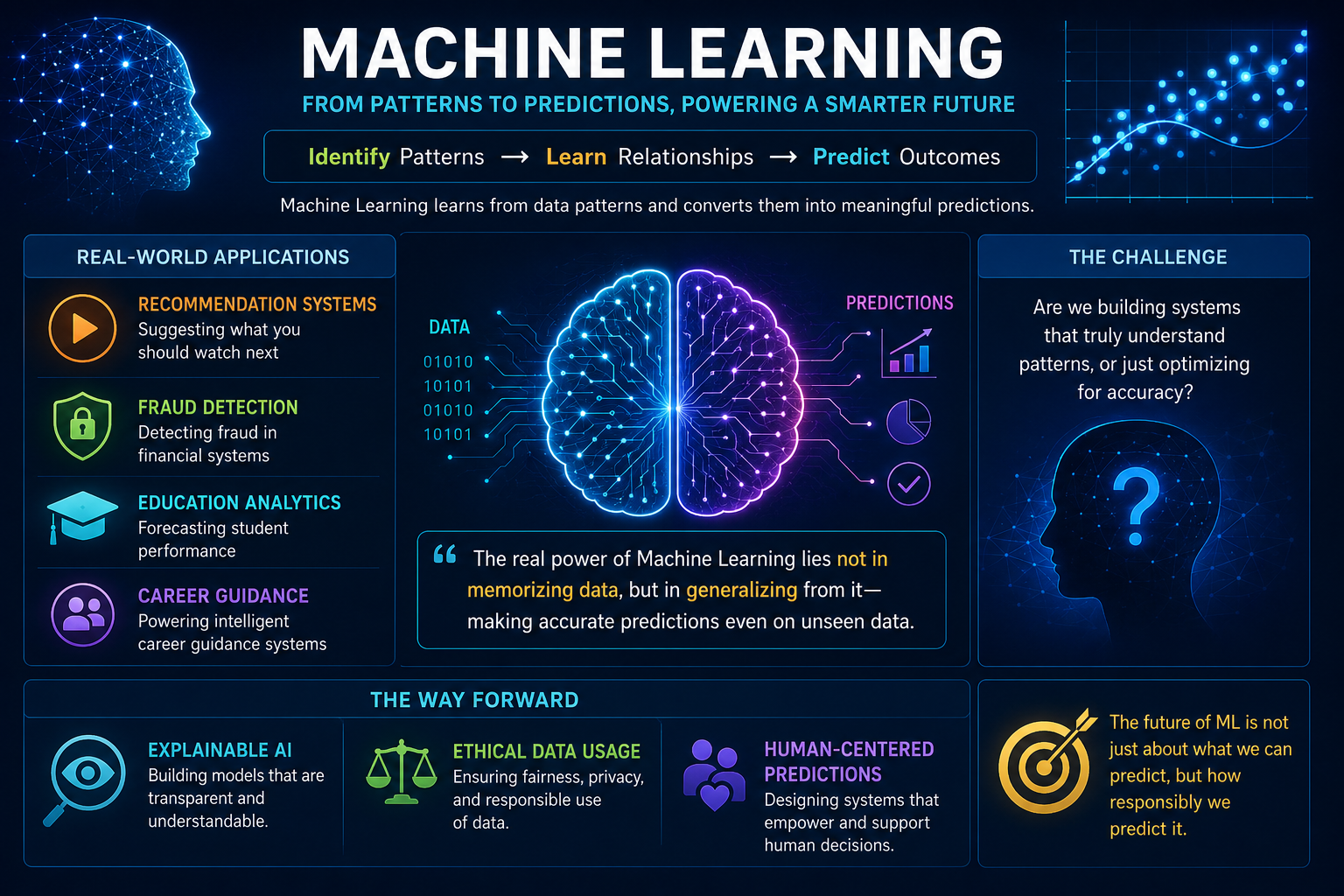
    Machine Learning isn’t just about algorithms—it’s about learning patterns hidden within data and transforming them into meaningful predictions.

    At its core, ML works like this:

    Identify patterns → Learn relationships → Predict outcomes

    Whether it’s:

    ✔ Recommending what you should watch next

    ✔ Detecting fraud in financial systems

    ✔ Forecasting student performance in education

    ✔ Powering intelligent career guidance systems

    …it all begins with patterns in data.

    The real power of Machine Learning lies not in memorizing data, but ingeneralizing from it—making accurate predictions even on unseen data.

    But here’s the challenge: Are we building systems that truly understand patterns, or just optimizing for accuracy?

    As we move forward, the focus should shift toward:

    🔹 Explainable AI

    🔹 Ethical data usage

    🔹 Human-centered predictions

    Because the future of ML is not just about what we can predict, but how responsibly we predict it.

    #MachineLearning #ArtificialIntelligence #DataScience #PredictiveAnalytics #AI #Innovation #FutureOfWork